When New York utility officials gathered at a private industry conference in March, they spoke candidly about their collection strategies, laughing as an audience member joked about cutting power to customers on oxygen, dismissing heat wave shutoff protections as “bogus,” and describing how they coordinated to keep it that way.
Audio obtained by Courier New York captures what they said.
The recording runs nearly two hours and was made at the 2026 Annual Utilities Credit & Collections Symposium, held March 16-18 at the Hyatt Regency Coral Gables in Florida. The conference page was scrubbed from the internet after the comments first surfaced. While previous reporting by Newsday and the New York Times revealed isolated details from the event, Courier New York obtained the full audio.
In the recording, PSEG Long Island collections supervisor Mike Sedlak describes elderly, and disabled customers as “tons of opportunity,” tells attendees that shutoff threats work because “people think much better in the dark,” and dismisses New York’s new heat wave shutoff protections as “bogus.”
Sedlak also describes a process for removing state-designated protections from accounts flagged as elderly or disabled, without any oversight from the Department of Public Service (DPS). “We’re able to remove the flag ourselves,” he says. “There’s no DPS approval.”
He also tells attendees his team’s philosophy on payment agreements: “I don’t care if you owe $100 or a million dollars. We’re always going for the full amount up front.”
In a separate session, Con Edison’s Joe Duggan and National Grid’s Jeff Koenig describe how New York’s major utilities coordinated behind the scenes to present a unified front to state regulators on heat wave shutoff rules—and hired a consultant to help craft their response to the Public Service Commission (PSC).
“When the PSC comes to talk to us individually, we get the same answer,” Koenig said.
A day after the session, the PSC announced its new statewide heat wave shutoff policy. The utilities got most of what they wanted, a 90-degree threshold, but the rules drew immediate criticism from advocates. Laurie Wheelock, executive director of the Public Utility Law Project, said New York City customers “lost meaningful safeguards” under the new policy, which for the first time removed Con Edison’s existing prohibition on shutoffs the day before a forecast heat wave. Louise Yeung, New York City’s climate chief, said the policy “weakened protections for New Yorkers instead of making them stronger.”
The coordination session and its outcome were first reported by the Times.The state Department of Public Service (DPS) launched a statewide investigation in response to the initial reporting on the conference, issuing a May 7 demand letter to PSEG Long Island, National Grid, Con Edison, and other major utilities requiring extensive documentation on their collection practices. PSC Chair Rory M. Christian wrote that “there is nothing humorous about a household losing essential utility service.”
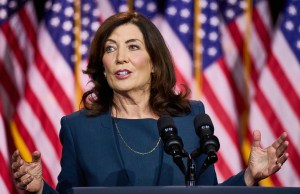
Gov. Kathy Hochul separately directed the DPS to conduct its own probe, saying shutoffs “should be viewed as a last resort, not something to joke, threaten, or brag about.”
On May 20, PSEG Long Island President Scott Jennings publicly apologized at a Long Island Power Authority (LIPA) board meeting, calling Sedlak a “former PSEG employee” and saying his comments were “totally unacceptable.”
The company has not said whether Sedlak resigned or was terminated. LIPA chairwoman Tracey Edwards called the comments “unacceptable and deeply troubling,” and the board unanimously approved a resolution calling for an expanded review of collection practices, including protections for seniors, medically vulnerable individuals, and low-income households.
LIPA trustee Dominick Macchia pushed back on the idea that the comments were an isolated incident.
“He was your fair-haired boy, he had your highest collections and if you don’t think he shared that with his group, I think you are mistaken,” Macchia said. “It wasn’t a one-off. It was cultural.”
PSEG has suspended shutoffs for collections during its internal review, but has not halted collections by outside agencies, according to Newsday. The company declined to say how many third-party collections firms it uses or whether an incentive program for collections agencies described in the audio remains in place. In April alone, 3,542 customers on Long Island and the Rockaways had their power shut off.
Courier New York reached out to PSEG Long Island, Con Edison, and National Grid for comment. None directly addressed the contents of the audio.
PSEG said the comments “are not representative of the values or practices of PSEG Long Island.”
Con Edison said termination of service “is a last resort, used only after repeated efforts to work with customers through payment plans and assistance programs,” and called utility coordination with the PSC “standard practice in New York.”
National Grid said terminating service “is always a last resort” and defended the coordination Koenig described on tape, saying “it is essential for utilities to share best practices and work closely with regulators.”
The company did not respond to questions about whether it stood behind Koenig’s comments at the conference. National Grid also filed a request on May 19 to seal its responses to the DPS investigation—but did not explain why when asked by Courier New York.
The DPS investigation is ongoing under Matter 26-00971.