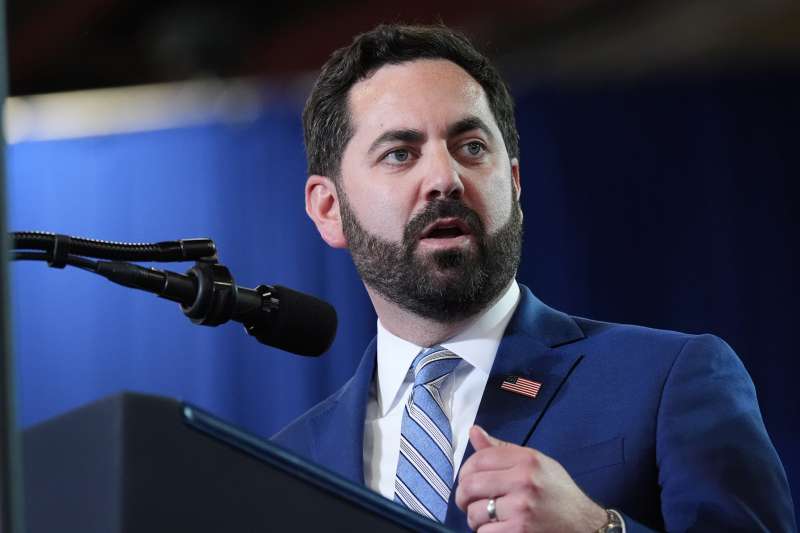
Rep. Mike Lawler defended his vote for the One Big Beautiful Bill Act (OBBBA), the 2025 Republican tax-and-spending law, during a News 12 debate on Tuesday, saying, “We voted to protect Medicaid.”
In New York’s 17th Congressional District, the law’s federal funding cuts have already forced New York to end Essential Plan eligibility for nearly 14,000 enrollees, and the state estimates hundreds of thousands of New Yorkers could lose Medicaid under work requirements that take effect Jan. 1, less than two months after Election Day.
The Pearl River Republican voted for OBBBA twice. On May 22, 2025, when it cleared the House by a single vote, 215–214, and on July 3, 2025, when the final version passed 218–214. The law is estimated to reduce federal Medicaid spending by $990 billion over a decade, or $911 billion after accounting for overlap between provisions, according to KFF’s analysis of Congressional Budget Office estimates.
Lawler said the law requires “eligibility verification, proof of citizenship, and work requirements for able-bodied adults to make sure we’re not taking away from the disabled, working mothers, children, and our seniors.” He argued that the only people who will lose coverage are those who no longer qualify for it, the Hudson Valley Digger reported.
Lawler has also cast the law as a tax cut, pointing to the provision he championed that raised the cap on state and local tax deductions to $40,000, according to his office.
His campaign has pressed the same message in a Facebook ad featuring Ramapo Deputy Supervisor Brendel Logan-Charles, a Democrat, who tells viewers, “You still have your insurance intact. You don’t have any cuts at all.”
State figures paint a starker picture.
The first wave
Essential Plan is New York’s public health insurance program for lower-income adults who don’t qualify for Medicaid. It offers $0 monthly premiums and low out-of-pocket costs.
Because of federal funding cuts in OBBBA, New York ended Essential Plan eligibility on June 30 for enrollees earning between 200% and 250% of the federal poverty level. In NY-17, the change reached 13,987 enrollees, per New York State of Health.
The program had offered $0 premiums and minimal cost-sharing. Those who moved to private marketplace plans now face monthly premiums and deductibles that can reach thousands of dollars, the state Department of Health has warned.
Statewide, 41% of affected enrollees had not enrolled in a new marketplace plan by the time the special enrollment period closed Aug. 30.
Those who did find new coverage often face steep costs. One former enrollee in neighboring Ulster County now pays about $800 a month for a marketplace plan.
On Oct. 1, another provision of the law took effect, ending federal Medicaid eligibility for many refugees and other lawfully present immigrants. In other states, thousands are losing coverage outright.
New York is moving those enrollees to its Essential Plan with no change in benefits, according to the state. State budget projections show the plan’s reserves for lower-income enrollees running out at the end of 2028 without new funding, according to the Fiscal Policy Institute.
The January cliff
Beginning Jan. 1, some Medicaid enrollees ages 19 to 64 must show they work, attend school, train for a job or volunteer at least 80 hours a month, or earn at least $580 a month under the state’s implementation of the law. Many will also have to renew their coverage every six months instead of once a year.
The state Department of Health estimates at least 475,000 New Yorkers could lose Medicaid from the combined effect of work requirements and more frequent eligibility checks, per Attorney General Letitia James’ office.
In Rockland County, 35% of residents and 46% of children are covered by Medicaid.
Lawler’s July 2025 statement on the bill’s passage described the requirements as applying to “certain able-bodied adults without dependents.” New York exempts parents and caretakers of children under 14, according to the state, so parents of older children must comply unless they qualify for another exemption.
Two Rockland County hospitals, Good Samaritan Hospital in Suffern and Montefiore Nyack Hospital, appear among 45 New York hospitals that the consumer watchdog Public Citizen considers at risk of closures, layoffs, or reduced services because of the law’s Medicaid cuts, per Hudson Valley Post.
The group flagged hospitals where Medicaid and other low-income programs made up at least 20% of the payer mix and that posted negative average profit margins from 2022 through 2024. Public Citizen describes the list as an assessment of financial risk, without forecasting specific closures.
The fight over the rules
In June, James joined attorneys general from two dozen other Democratic-led states and the District of Columbia in suing the Trump administration over a federal rule that narrows who qualifies for the law’s “medically frail” exemption.
In late July, a federal judge in Massachusetts denied the states’ request to pause the rule, keeping the Jan. 1 deadline in place. Medical groups and patients filed a separate challenge in September.
Lawler faces Democrat Cait Conley, an Army veteran from New Castle, in a race Sabato’s Crystal Ball rates as a toss-up. A PIX11 News/Emerson College poll released Thursday found Conley at 48% and Lawler at 46% among likely voters, a margin within the survey’s credibility interval of plus or minus 4.9 percentage points.
Conley has campaigned on lowering health care costs, along with banning stock trading by members of Congress.
“He was a deciding vote on the One Great Big Ugly Bill that has ripped healthcare from hundreds of thousands of New Yorkers,” Conley said during the debate.
Lawler’s office and campaign did not respond to Courier New York’s request for comment.
How to check your coverage
New Yorkers with questions about their Medicaid or Essential Plan coverage can call NY State of Health at 1-855-355-5777 or find a free enrollment assistor nearby.
Federally qualified health centers see patients regardless of insurance status, often on a sliding scale based on income. The federal Health Center Finder can help locate the nearest one.