Reporting by Sunshyne Lynch and Victoria E. Freile, Binghamton Press & Sun Bulletin
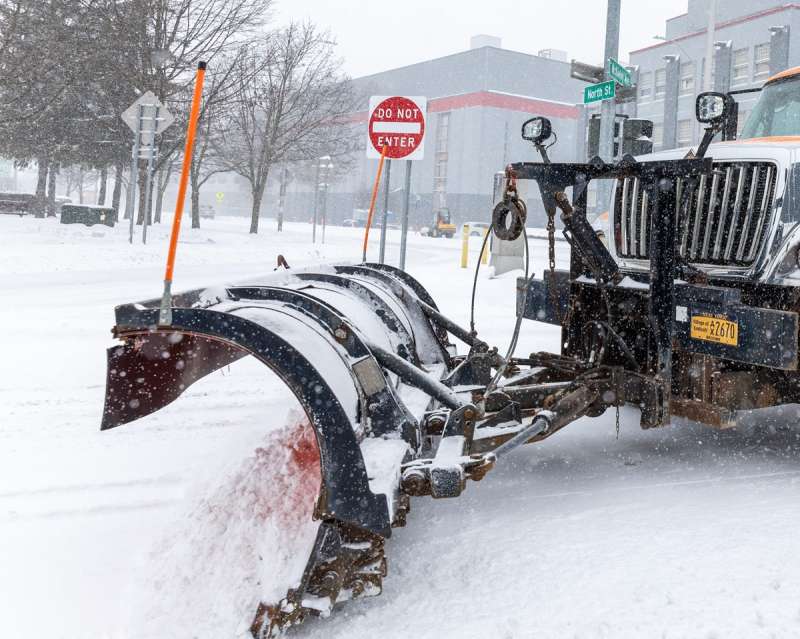
The season for freezing weather and snowfall is on the horizon, and it may be a difficult one in the Southern Tier.
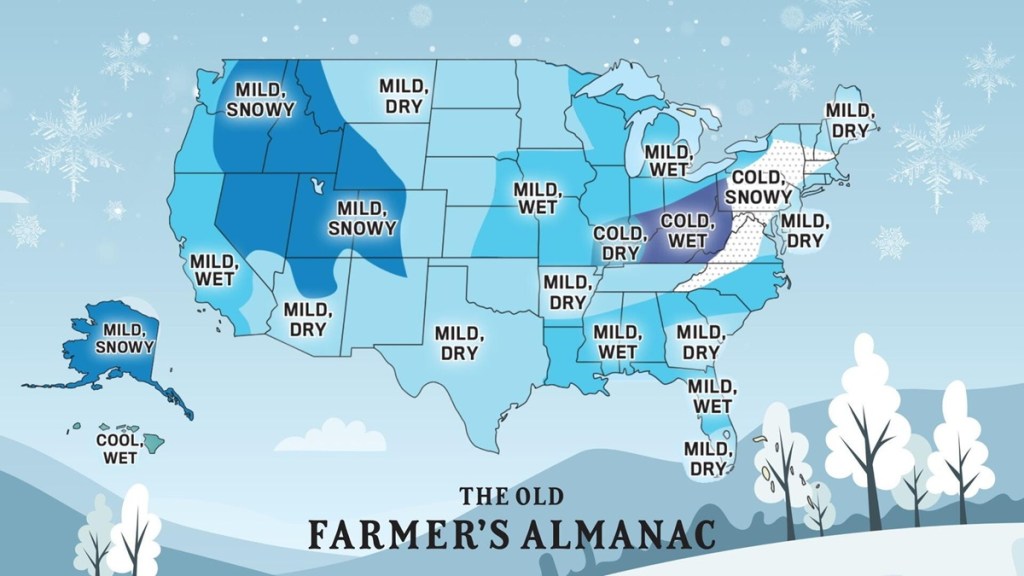
The Old Farmer’s Almanac has published its predictions for the 2026-27 winter season across the country and, according to the Southern Tier forecast, residents there could see a season of colder temperatures and heavier snowfall.
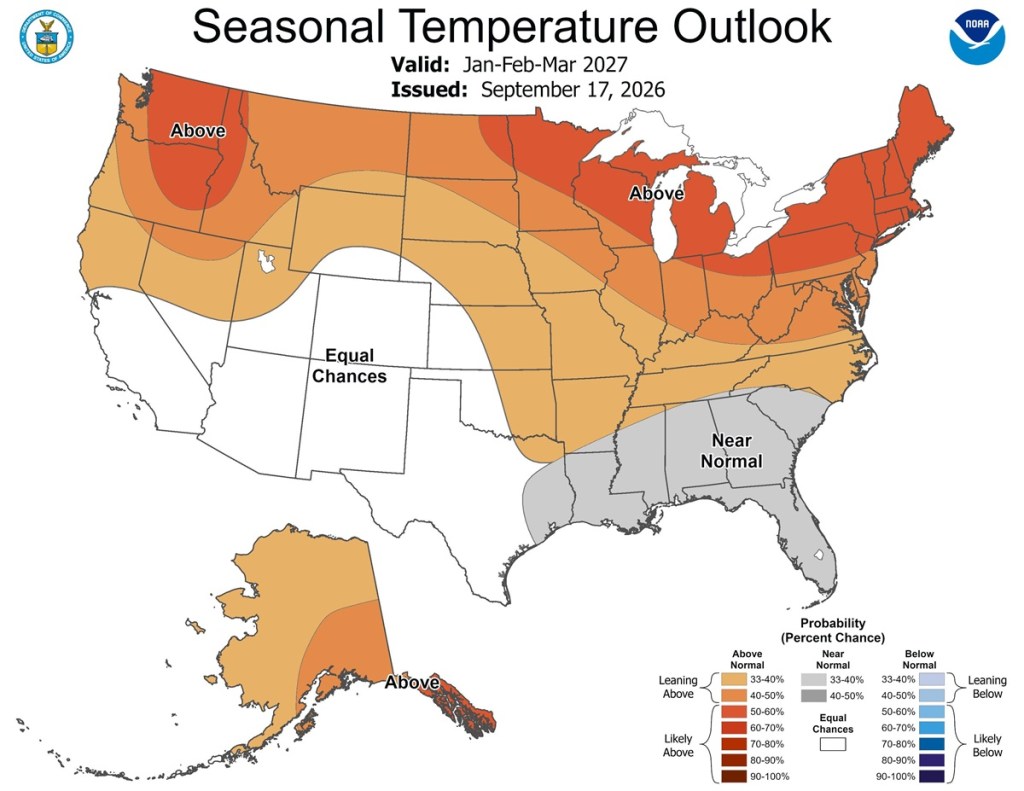
However, a seasonal outlook from the National Weather Service’s Climate Prediction Center forecasts that a warmer-than-normal winter may be ahead for New York
If you’re wondering what the Southern Tier could see as winter unfolds, here’s what to know about the 2026-27 winter season, according to the Old Farmer’s Almanac, the Farmers’ Almanac and the National Weather Service.
When is the first day of winter?
The first day of winter falls on Monday, Dec. 21, 2026. The start of the season is marked by the winter solstice, according to the Old Farmer’s Almanac, which is also the shortest day of the year with the least amount of sunlight.
Old Farmer’s Almanac 2026-27 Southern Tier forecast
The Old Farmer’s Almanac is calling for a “more difficult winter” in the “southern part of the northeast,” so Southern Tier residents could experience a bit of a formidable season.
Specifically, the almanac states temperatures will be below normal in the southern part of the region, with the coldest periods occurring in early-to-mid January 2027.
Precipitation will be below normal overall, according to the outlook, but snowfall amounts could be above normal in the southern part of the region, with the snowiest periods occurring in mid-to-late December, the middle of January, along with the early and late parts of March.
The Old Farmer’s Almanac forecast varies depending on where you live in New York. Here’s the regional breakdown:
Elmira, Binghamton, Ithaca: Appalachian Region
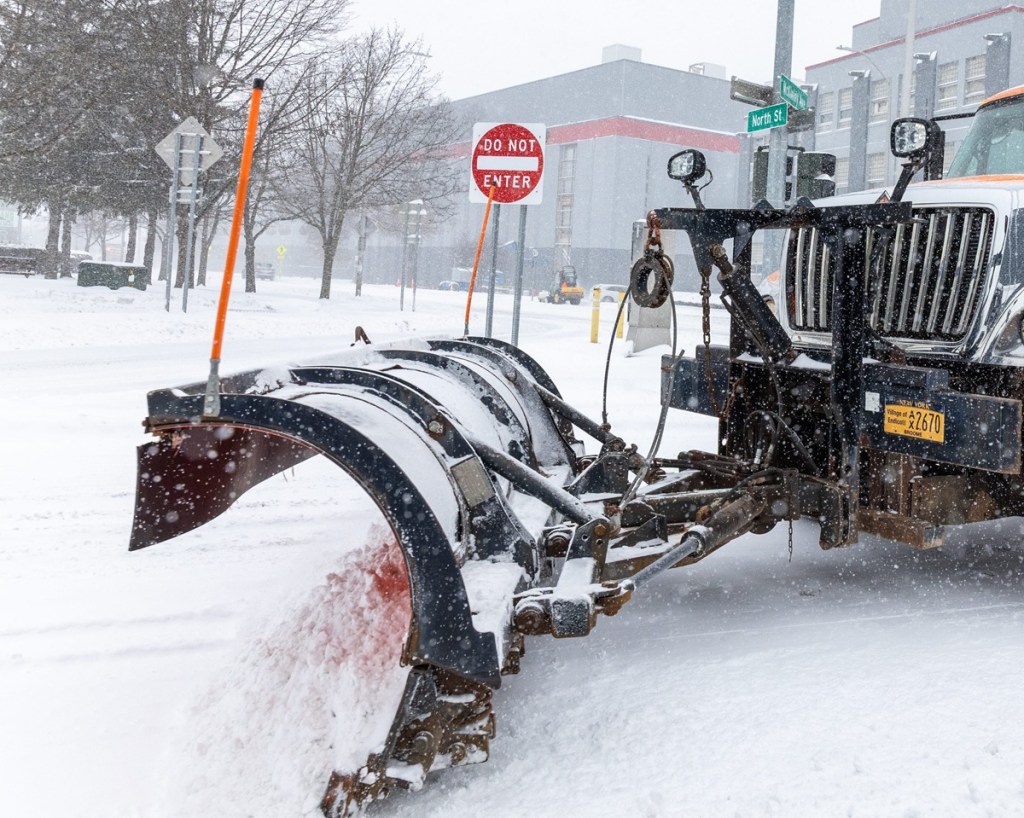
Forecast: Cooler and snowier conditions are expected.
Temperatures: Below normal
Snowfall: Above normal
Rochester, Buffalo, Syracuse: Lower Lakes Region
Forecast: Warmer than normal with above-normal precipitation
Temperatures: Above normal
Snowfall: Near to below normal
Utica, Albany, Adirondacks: Northeast Region
Forecast: Conditions will vary by location, with warmer temperatures and less snow in the north and cooler temperatures and more snow in the south.
Temperatures: Above normal in the north; below normal in the south
Snowfall: Below normal in the north; above normal in the south
New York City, Long Island: Atlantic Corridor Region
Forecast: Warmer and slightly less snowy conditions are expected.
Temperatures: Above normal
Snowfall: Slightly below normal
How does the Old Farmer’s Almanac make predictions?
The predictions are based on “three scientific disciplines,” the almanac states, which are:
- Solar science: the study of sunspots (magnetic storms on the Sun’s surface) and other solar activity
- Climatology: the study of prevailing weather patterns
- Meteorology: the study of the atmosphere (what short-range weather forecasters do)
Along with these main aspects, the Old Farmer’s Almanac also looks at “historical weather patterns, current solar activity, climate data and large-scale climate signals to predict upcoming temperature and precipitation trends.”
How accurate are the Old Farmer’s Almanac predictions?
The Old Farmer’s Almanac says its predictions are 80% accurate.
The publication’s seasonal outlook can provide a general idea of what to expect, but it is not a substitute for short-term forecasts from the National Weather Service. Those forecasts become more useful as individual winter storms approach.
National Weather Service winter predictions for New York
In comparison, the Weather Service’s seasonal outlook through March 2027 shows New York leaning toward above-normal temperatures.
The Climate Prediction Center’s latest seasonal outlook indicates an increased chance of above-normal temperatures across New York through March 2027.
The outlook shows New York’s chances of warmer-than-normal temperatures ranging from 50% to 60%, with above-normal temperatures also favored across much of the Northeast.
For precipitation, the Weather Service forecasts equal chances of above- or below-normal precipitation across western New York and parts of central and northern New York.
For the three-month period through the end of 2026, the Weather Service forecasts equal chances of above- or below-normal precipitation across New York and much of the Northeast.
Farmers’ Almanac winter predictions for New York
Meanwhile, The Farmers’ Almanac, not to be confused with the Old Farmer’s Almanac, describes the upcoming winter as one of its “most complicated winter patterns.”
The publication is calling for a “tricky” and unpredictable mix of rain, sleet, ice and heavy, wet snow across the Northeast.
Storm tracks could play a major role in what falls across different parts of New York. Small changes in a storm’s path could mean rain in one area while another sees sleet, freezing rain or accumulating snow.
Inland areas of the Northeast could see several rounds of heavy, wet snow, particularly in January and February, according to the Almanac.
The Almanac advises residents to be prepared for forecasts to change quickly as storms approach.
When does winter end?
One thing is for certain.
Winter ends March 20, 2027, when the spring equinox occurs.
This article originally appeared on Binghamton Press & Sun-Bulletin.
Related: Home heating oil prices surge 67% in New York amid Iran War