Reporting by Amy Neff Roth, Utica Observer Dispatch
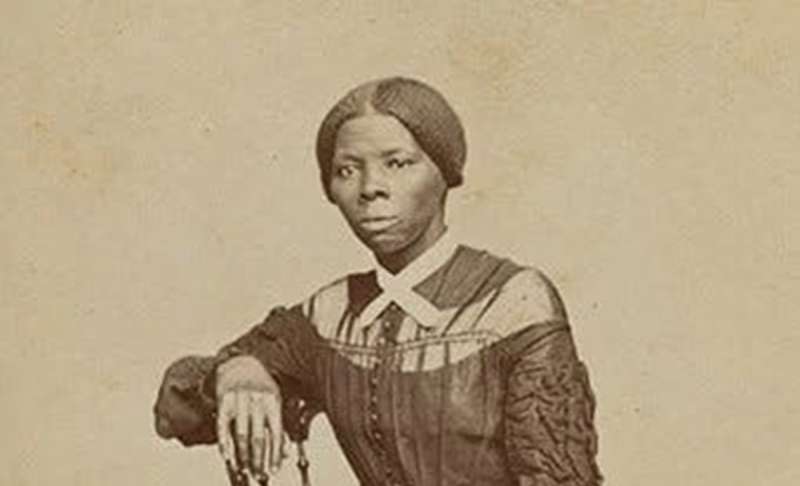
New York just celebrated the legacy of Harriet Tubman by designating the Harriet Tubman Underground Railroad Byway from Auburn, Tubman’s home of 54 years, to Niagara Falls in June.
The 173-mile scenic byway with almost two dozen designated heritage sites along its route, including the Harriet Tubman National Historical Park in Auburn, represents Phase 1 of a planned 550-mile route from Manhattan to Niagara Falls, the route along which enslaved persons traveled to freedom in Canada.
Phase II of the byway, still in the planning stages, will run from New York City to Auburn, passing through Herkimer, Oneida and Madison Counties. The counties’ inclusion is a sign of the area’s importance to the Underground Railroad and the abolitionist movement, although heritage sites along the Phase 2 route have not yet been determined.
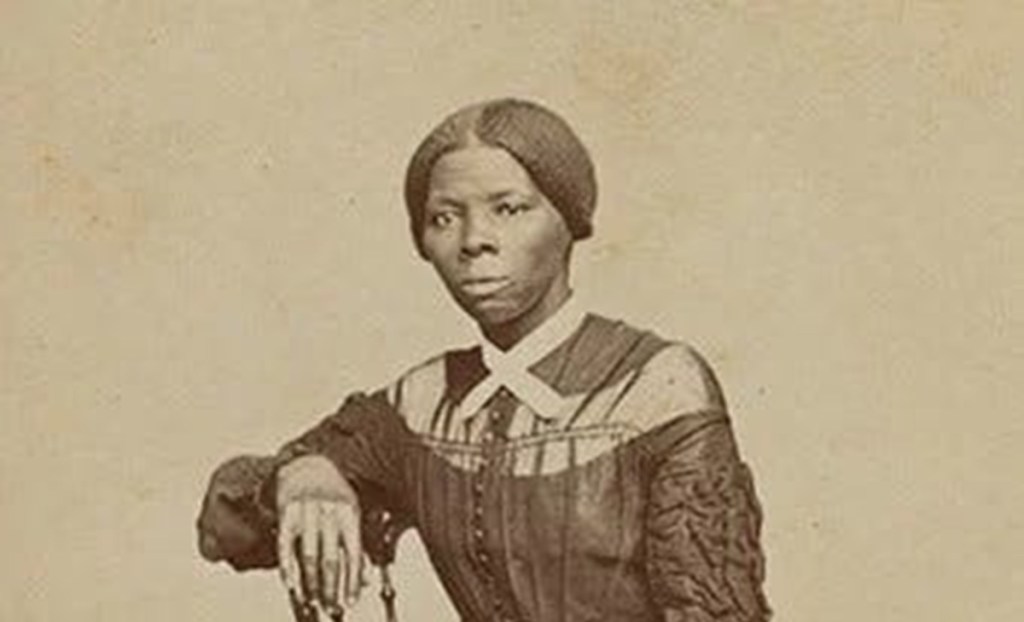
Harriet Tubman on the $20?
The bypass isn’t the only honor that was slated to be bestowed upon Tubman. Former Secretary of the Treasury Jack Lew announced in 2016 that Tubman would replace President Andrew Jackson on the $20 bill following a grassroots campaign the previous year in which Tubman had won a poll asking which woman should be featured on the $20.
That plan may not come to pass, though. It has moved forward in fits and starts over the years under different presidential administrations. And current Treasury Secretary Scott Bessent said earlier this year that the Treasury Department is not currently moving forward with the redesign.
So U.S. Rep. John Mannion, D-Geddes, whose district includes Auburn, sent Bessent a letter, also signed by U.S. Rep. Joyce Beatty, of Ohio, Congressional Black Caucus Chair Emerita, arguing for Tubman’s place on the $20 bill, criticizing the project’s lack of transparency and asking for a detailed update on the project and its current status.
“Harriet Tubman put her own life and freedom at risk to lead hundreds of enslaved Americans to freedom,” Mannion and Beatty wrote. “Like the other patriots we honor on our currency, Tubman was an American hero whose extraordinary life embodied our nation’s enduring commitment to liberty and justice for all. It is long past time for our currency to recognize the historic contributions of women who helped shape the story of our nation.”
Mannion has not heard back from Bessent, according to his office.
If Jackson remains on the $20 bill, the disappointment would be felt far beyond Auburn, including in the Mohawk Valley, an area with strong ties to Tubman, the Underground Railroad and the abolitionist movement.
“Which individual, Harriet Tubman or Andrew Jackson, should be a symbol for our children and the next generation?” asked Milton Sernett, a professor emeritus of American studies and history at Syracuse University, author of “Harriet Tubman: Myth, Memory and History,” and a board member of the National Abolition Hall of Fame and Museum in Peterboro. “As an historian, when I think of Andrew Jackson, I think of the Indian Removal Act of 1830, which Jackson championed and signed into law, which forced approximately 50,000 Native Americans off their ancestral lands. This was the so-called ‘Trail of Tears.’”
Jackson was also a wealthy owner of a plantation with over 150 enslaved people, Sernett pointed out. The former president also directed the postmaster general to censor abolitionist mail and banned the delivery of anti-slavery literature to the southern states, he said.
Tubman, on the other hand, was a tiny woman, born into slavery, who after being freed, led others to freedom on the Underground Railroad and has been held up by many rights groups as a “heroic figure who bridges societal divisions of race, class, gender and nationality,” Sernett said.
“What values do we want to teach our children and pass on to the next generation?” he asked. “What values will we be living by as individuals and as a country? Her example of helping others, of facing danger and yet surviving, these are values that every individual in America today, I would think, would want to live by.”
Tubman in Oneida and Madison counties
Tubman, a former slave who was freed in 1849, “conducted” about 70 enslaved persons to freedom in 11 to 13 trips along the Underground Railroad in the 1850s, according to her biography on the website of the National Abolition Hall of Fame and Museum in Peterboro in Madison County.
Tubman was inducted into the Hall of Fame as part of its inaugural class in 2005.
During those trips, she stopped in Peterboro and met Gerrit Smith, a wealthy businessman and leading abolitionist who operated an Underground Railroad station. With the Smith family, Tubman felt “safe, supported and welcomed,” the biography noted.
The Gerrit Smith Estate in Peterboro is a National Historic Landmark.
Tubman later made personal visits to the Smith family. During one visit, Smith’s son Greene noticed that Tubman wasn’t wearing proper shoes so he delayed his own plans to go buy her better shoes, according to the Hall of Fame.
Tubman’s trips along the Underground Railroad would have brought her through Oneida County, but she never revealed where specifically she went, said Jan DeAmicis, co-chair of the Oneida County Freedom Trail Commission, a board member of the National Abolition Hall of Fame and a Utica University professor emeritus of sociology.
Many freedom seekers came north along the Erie Canal towpath or on the actual railroad; if Tubman took either route, she would have passed through Utica, he said.
Underground Railroad in Oneida County
There were a couple dozen Underground Railroad stations spread out all across Oneida County, DeAmicis said.
Historian Judith Wellman, a professor emeritus of SUNY Oswego, has estimated that about 1,000 freedom seekers passed through Oneida County, DeAmicis noted.
Six area sites — five in Oneida County and one in Madison County — are included in the National Park Service’s Network to Freedom, which features more than 900 sites nationwide.
The local sites are:
- 96-98 Genesee St., Utica. The law offices of Oneida County Judge Chester Hayden were once located at this address. On Dec. 29, 1836, two men — Harry Bird and George — who had escaped from slavery were brought to Hayden’s office and Hayden was about to release them to two slave catchers from Virginia when abolitionists Spencer Kellogg and Alvan Stewart argued that the men deserved a legal hearing. The judge agreed and told the slave catchers, Harry Bird and George to remain in a back room while he completed work at the county courthouse. But a crowd gathered around Hayden’s office. They broke into the office and freed Bird and George while the judge was gone and sent them off along the Underground Railroad.
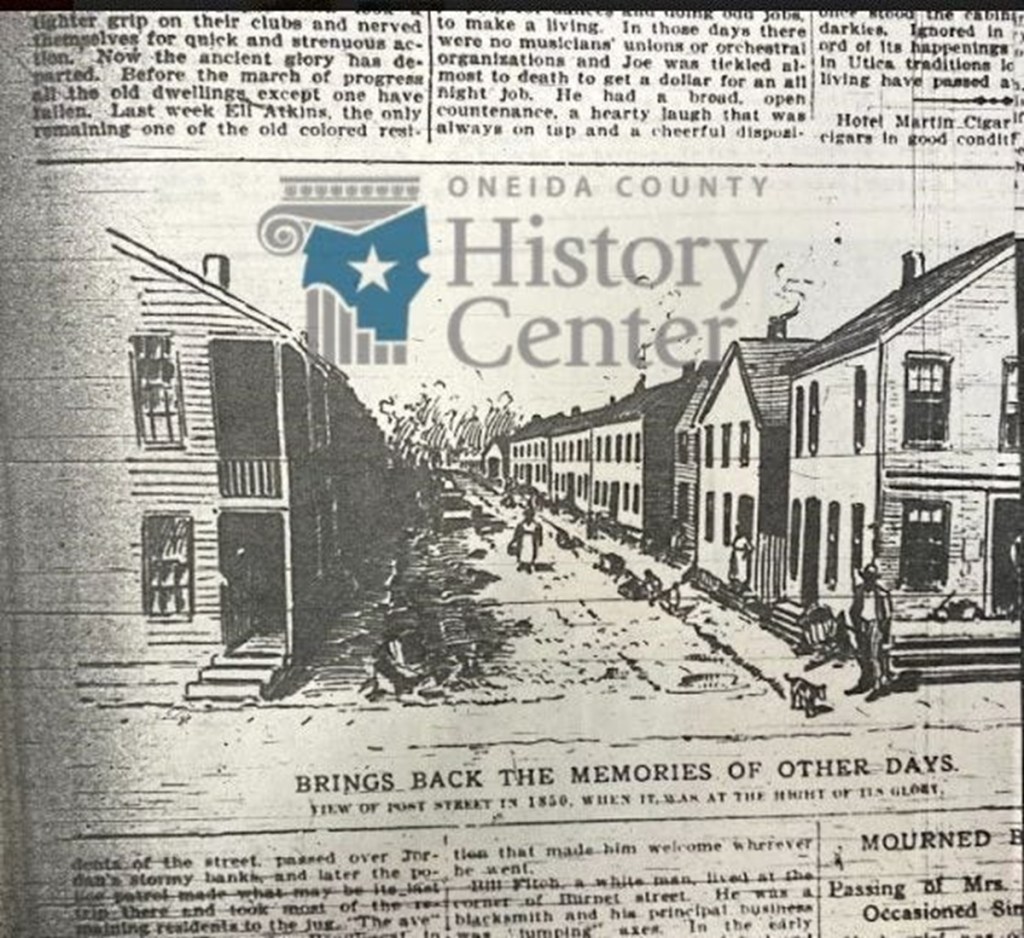
- Post Street, corner of Post and Burnett streets, Utica: Some of the men involved in the rescue of Bird and George lived on Post Street, a neighborhood where a number of freedom seekers and formerly enslaved persons lived. And residents helped other freedom seekers traveling along the Underground Railroad. One freedom seeker, John Thomas, had escaped from Carmelite nuns in Baltimore and ended up on Post Street, from which he was taken by Black barber William Johnson to an Underground Railroad station operated by abolitionist Wesley Bailey in Paris Green. Thomas ended up settling in Paris Green with six other freedom seekers; their graves are in a cemetery in Paris Green, DeAmicis said.
- West Street, Grand View Cemetery, Village of Whitesboro: Rev. Beriah Green, president of the Oneida Institute of Science and Industry, which was located in the village, is buried here. The institute was the first mixed-race college in the country. Faculty and students were known for their support of “immediatism,” that is, the immediate and uncompensated end of slavery. Green’s home in the village served as an Underground Railroad station and institute students also protected freedom seekers. Several students were, in fact, freedom seekers themselves. Green also served as the presiding officer of the American Anti-Slavery Society at its organizational meeting in 1833 in Philadelphia.
- Star Hill Road, Capel Ucha Cemetery, Town of Steuben: Rev. Robert Everett and his family are buried in this cemetery for a former Congregational church serving the Welsh community. Everett and his family hosted freedom seekers in their home across the street from the cemetery. He also preached abolition and published a monthly, Welsh-language periodical that supported abolition and serialized “Uncle Tom’s Cabin” in Welsh.
- The Florence settlement, Florence: This settlement recruited freedom seekers and freemen as settlers and promoted land ownership and self-sufficiency for formerly enslaved people. Abolitionist Gerrit Smith gave land at the settlement to Black men in 1846 and Florence became a “vital” destination for freedom seekers given its proximity to the Erie Canal and other safe havens, according to the National Park Service. The settlement symbolized “Black land ownership, resilience and the enduring pursuit of freedom, inspiring us with stories of bravery and determination,” according to the NPS site summary.
- Gerrit Smith Estate National Historic Landmark, 5304 Oxbow Rd., Peterboro: The Smith estate in the Town of Smithfield in Madison County served as “the Grand Central Station of the Underground Railroad,” the NPS noted in its site description. It lies at the junction of several Underground Railroad routes through Central New York. The Smith family housed freedom seekers in the kitchen and the barn. Smith was an influential abolitionist who made speeches, wrote essays and gave sizable donations to the cause. He bought freedom for many enslaved people. Abolitionists gathered at his estate to discuss issues and make plans.
Abolitionism
Oneida County was home to many abolitionists.
“Oneida County was really in the very middle of the abolition movement,” DeAmicis said. “And certainly a very hot spot for the Underground Railroad.”
Every town had its own anti-slavery society, he said. And the New York Anti-Slavery Society was founded in Utica in 1835, although a riot by an anti-abolition mob forced an early end to the meeting.
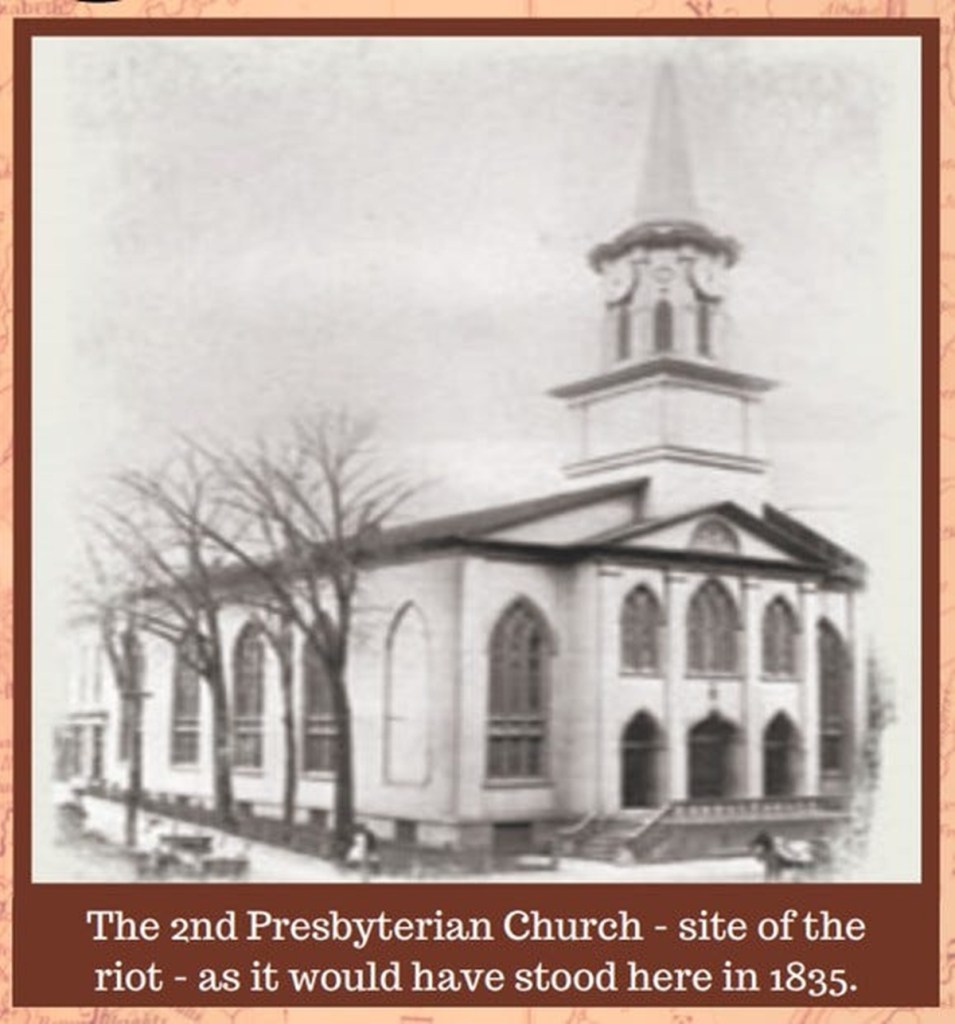
Smith, not yet a fully committed abolitionist, suggested that the meeting reconvene in Peterboro. A group of abolitionists took a barge to Canastota and then walked nine miles over the hills to Peterboro, an event commemorated annually in the Abolition Road Walk, taking place this year on Saturday, Oct. 10.
The meeting reconvened in the Smithfield Community Center, which now hosts the National Abolition Hall of Fame and Museum. The society’s second annual meeting took place in Utica without any riots.
Smith, a rich businessman whose father, Peter, has been a partner of John Jacob Astor, went on to devote himself, his property and his fortune to the cause of abolition.
Tubman $20 bill reactions
Jan DeAmicis, co-chair, Oneida County Freedom Trail Commission; board member, National Abolition Hall of Fame and Museum; and professor emeritus of sociology at Utica University talked about putting Tubman on the $20.
Putting Tubman on currency is “absolutely right.”
“She is an American hero: totally obscure, small, Black, former enslaved woman. And the things that she did made a big difference. . . .
“There’s nobody else like her in American history, absolutely nobody else like her. . . .
“Who else could be more deserving? Who did such outstanding and heroic things than she did? . . .
“I’m really proud to be part of the movement to get the Harriet Tubman Underground Railroad Byway established in New York State.”
Milton Sernett, a professor emeritus of American studies and history at Syracuse University; author of “Harriet Tubman: Myth, Memory and History;” and board member of the National Abolition Hall of Fame and Museum in Peterboro offered his support.
“She is someone whom the collective memory often celebrates as an example of values that our generation and our next generation should keep remembering. . . .
“Tubman’s reputation is such that her symbolic power has been tapped by groups advocating the rights of African Americans, of women, of the elderly, of the disabled, children, the poor, victims of domestic violence. In other words, many different groups have taken her as a heroic figure who bridges societal division of race, class, gender and nationality. . . .
“In some ways our democracy’s failures are mirrored in her, too. She knew this thing of racism, the pain of poverty, the challenges of adversity. And as long as some Americans believe that they suffer injustice, I would say they will find Tubman as a useful symbol of their struggle to achieve parity with those enjoying the full benefit of economic and political citizenship.”
U.S. Rep. John Mannion, D-Geddes, in a letter sent jointly with U.S. Rep. Joyce Beatty, Ohio-03, Congressional Black Caucus Chair Emerita, to Treasury Secretary Scott Bessent gave his opinion on making Tubman the face of the $20.
“The effort to place Tubman on U.S. currency began over a decade ago in 2015, when the grassroots “Women on 20s” campaign conducted an online poll asking the public to select a woman to be featured on the twenty-dollar bill. More than 600,000 votes were cast, and Harriet Tubman emerged as the public’s top choice.
“This initiative was lauded by members of Congress across the political spectrum, further cementing Tubman’s reputation as a universally admired and respected American hero. . . .
“However, your recent public statements that the department is not presently moving forward with the redesign have once again left our constituents and Americans across the country confused and disappointed by the department’s failure to follow through on this long-awaited effort. While we understand the need for an extended timeline to roll out a new paper currency and implement and ensure anti-counterfeiting measures, that does not excuse the complete lack of transparency surrounding the project status nor the apparent indefinite suspension of the entire initiative.”
This article originally appeared on Observer-Dispatch.