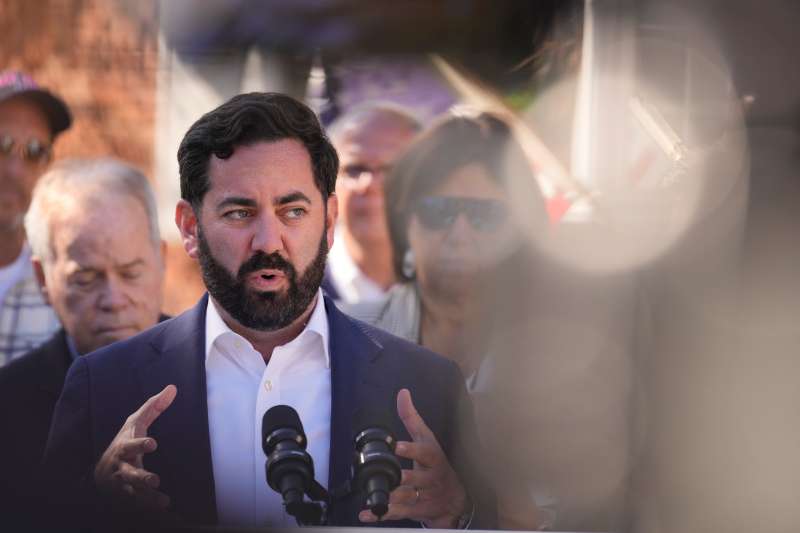
Rep. Mike Lawler (R-Hudson Valley) has repeatedly voted to shield President Donald Trump’s tariffs since early 2025, even as his district faces an affordability crisis.
Families in his Hudson Valley district have lost ground to the cost of living faster than voters in any other competitive House district, per a new Washington Post analysis published one week before Election Day.
The Post’s data predates Trump’s second term and doesn’t assign blame to either party. But it shows how little cushion the district’s families had when prices climbed again in 2026, partly because of tariffs Lawler has repeatedly defended.
How far behind are NY-17 families?
Between 2019 and 2024, the cost of basic necessities in New York’s 17th Congressional District climbed 34%, while incomes grew just 19%. That 15-point chasm is the widest among the 46 battleground districts the Post examined.
Kayla Vander Wiele, a 39-year-old Rockland County mother of two, told the Post her family has slid into a paycheck-to-paycheck existence. She and her husband earn about $115,000 combined, yet the Post estimates a family of four there needs roughly $151,000 a year to cover the basics. She picks up Starbucks shifts on evenings and weekends, and the family has resorted to taking on credit card debt to buy groceries.
“I don’t know how people are supposed to live,” she told the Post.
What have tariffs cost New York?
New York has absorbed an estimated $15 billion in costs from Trump’s executive tariffs between January 2025 and June 2026, the sixth-highest bill in the country, according to a National Taxpayers Union Foundation analysis reported by The Journal News. Back in February, estimates from the Budget Lab at Yale put the toll at about $1,751 for the average New York household in the tariffs’ first year alone.
Lawler has voted eight times to protect Trump’s tariffs, and dismissed their toll on consumers as “a little bit of short-term pain” in a March 2025 NewsNation interview. In February, he voted against a resolution to repeal Trump’s tariffs on Canadian imports, even as six of his Republican colleagues broke ranks, including Pennsylvania Rep. Brian Fitzpatrick, who also represents a swing district. After the Supreme Court struck down those tariffs, the administration imposed new 50% duties on more than 550 categories of Canadian goods, including cement and building materials.
How are tariffs affecting the district?
For small businesses in his district, the pain has outlasted the short term. At Mimi’s Coffee House in Mount Kisco, owner Selamawit “Mimi” Wieland-Tesfaye told Courier New York in May that the price of a 25-pound box of tomatoes had climbed from just under $30 to more than $80 in a matter of months. She cut payroll and took on more hours herself to absorb the costs.
“I’ve never met him, or he’s never come to my shop to talk to me and ask me how these things affect me,” she said of Lawler at the time.
Lawler’s own requests show the strain of tariffs on his district. In August, he asked the Trump administration to exempt Chilean rock salt from tariffs. He warned that higher costs could force Hudson Valley towns to choose between clearing roads and funding other public services.
The squeeze has extended beyond tariffs. Consumer prices rose 3.7% in the 12 months ending in September, while inflation-adjusted hourly earnings fell 0.7%, according to the Bureau of Labor Statistics. Gas prices spiked 9.1% in September alone, a surge the Post attributes largely to the Iran war. Lawler has defended that conflict, too, telling CNN he wasn’t worried about the political consequences of a “righteous decision.”
Where does the race stand?
Voters ranked the economy as their top issue in an Emerson College/PIX11 poll conducted in late September, which showed Lawler trailing Democrat Cait Conley, an Army combat veteran, 48% to 46%, within the poll’s margin of error. The Cook Political Report rates the race a toss-up.
“Hudson Valley families can’t afford another two years of Mike Lawler bending the knee to Donald Trump and corrupt special interests,” Democratic Congressional Campaign Committee spokesperson Riya Vashi said in a statement.
Republicans have argued the Trump administration inherited an affordability crisis. The Republican National Committee told the Post the administration hasn’t had sufficient time to resolve it, while the National Republican Congressional Committee pointed to tax relief and job growth.
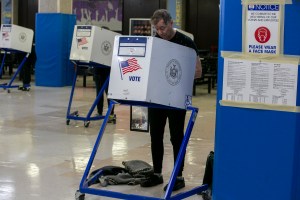
Early voting is underway, and Election Day is Nov. 3.
Lawler’s office did not respond to Courier New York’s request for comment.