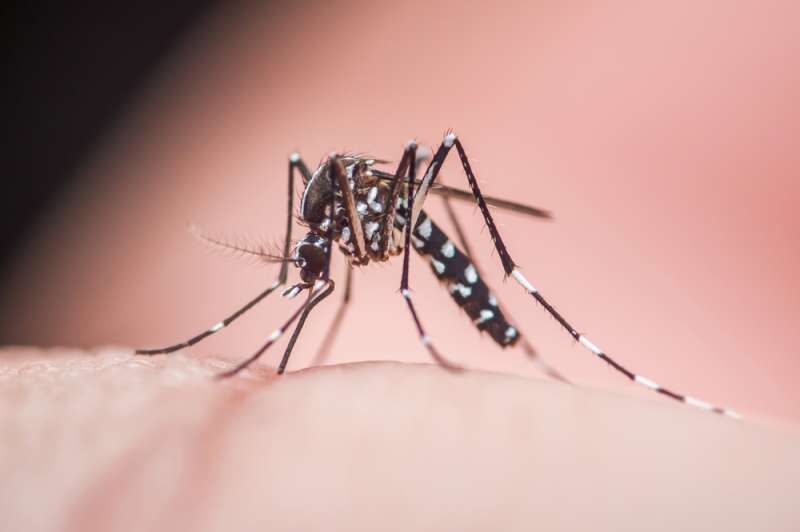
The New York City Health Department has confirmed its first positive case of West Nile virus of 2026.
In a press release, health officials said the affected individual contracted the virus after spending time outdoors across the city and throughout the five boroughs. The press release did not include the current conditions of the individual or where in the city they reside.
According to ArboNET, the national arboviral surveillance system operated by the CDC and state health departments, there have been 222 confirmed West Nile virus cases across 32 states, with the most cases in Arizona, Texas, and California.
What is West Nile virus?
West Nile virus is the leading cause of mosquito-borne disease in the US. It spreads through the bite of an infected mosquito and can affect humans, birds, horses, and other mammals. West Nile virus cannot spread from person to person through casual contact, officials say, but can be transmitted through infected blood transfusions or infected organ transplants in rare cases.
NYC Health Commissioner Dr. Alister F. Martin said the good news is that West Nile is preventable.
“With mosquito season in full swing,” he said. “We’re encouraging New Yorkers to take extra precautions to minimize the risk of mosquito bites.”
According to the NYC Health Department, the virus continues to appear each year from June through October, with peak activity in August and September. Since July, the department has collected mosquitos across the city to test for the presence of West Nile virus.
The department said it has conducted eight targeted mosquito control operations in neighborhoods containing West Nile virus, but did not specify which neighborhoods are most at risk for infection. However, according to the department’s mosquito control website, several Brooklyn neighborhoods were slated to receive Duet, an EPA-registered mosquito-control pesticide, on Monday and Wednesday.
Symptoms of West Nile virus
Symptoms of West Nile virus range from mild, moderate, to severe and include fever, tiredness, joint pain, vomiting, diarrhea, rash, paralysis, and death. Severe illness can occur at any age, but risks are highest for people who are over 60, immunocompromised, or who have underlying medical conditions. According to the CDC, more than 1,300 people develop severe illness and more than 130 people die from the virus annually.
How to prevent West Nile virus
City health officials urge residents to know the risks, reduce outdoor activity between dawn and dusk, use EPA-registered insect repellent containing DEET, picaridin, IR3535, or oil of lemon eucalyptus, and wear clothing to protect limbs. They also ask residents to contact their doctor if they begin to develop West Nile virus symptoms, as doctors can conduct blood tests to determine infection status.
Officials report that standing water provides ideal breeding grounds for mosquitoes, and say emptying water containers at least once a week can help limit the livelihood of mosquitoes. That includes buckets, flowerpots, birdbaths, children’s toys, tarps, plant saucers, clogged gutters, and other vessels. Keeping swimming pools, hot tubs, and ornamental ponds clean, chlorinated, covered, and properly drained when not in use also helps prevent breeding.
If you see large bodies of standing water caused by a street defect, clogged catch basin, or in general in private or public locations, you can report them online or by calling 311. For more information on West Nile virus prevention, visit the city’s website.