Reporting by Nancy Cutler, Rockland/Westchester Journal News
Heart diseases won’t be put on the list of covered health issues for 9/11 responders and survivors, the head of the World Trade Center Health Program recently ruled.
The negative finding, in response to petitions seeking coverage through the World Trade Center Health Program for ischemic heart disease, cited “insufficient evidence” when it was filed June 29 in the Federal Register.
The ruling is being questioned by first responders exposed to toxins during and after the Sept. 11, 2001 terrorist attacks and the doctors who oversee their care.
The leaders of World Trade Center Health Program Centers of Excellence and data centers unanimously submitted a letter on July 31 to WTC Health Program Administrator Dr. John Howard demanding the full study of ischemic heart disease and its link to the 9/11 toxins that were present on Sept. 11, 2001 and after at ground zero in Lower Manhattan, at the Pentagon and where passengers brought down a terrorist-commandeered jet over Pennsylvania.
The clinical directors, who had filed the original petition, cited “numerous significant flaws,” including failing to account for established science that links heart disease to the kinds of pollutants that were spewed into the air that day and in the weeks and months after.
Two 9/11 responders who live with heart disease question the rejection too.
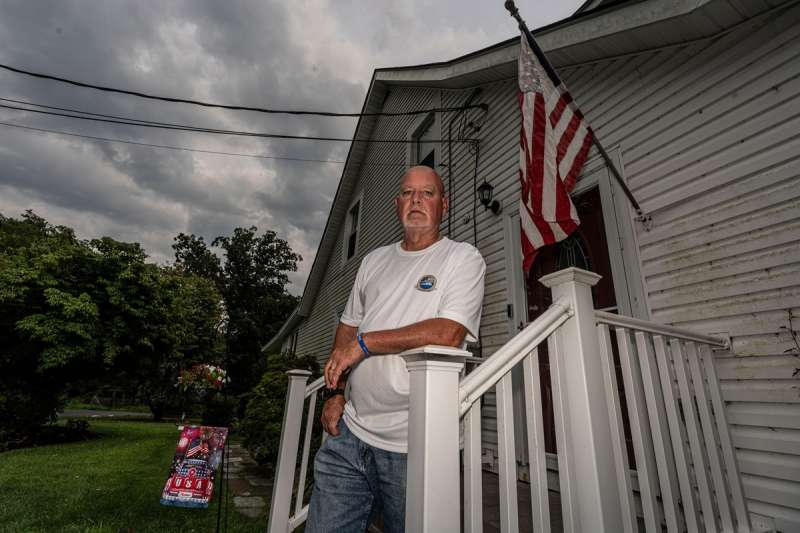
Richard Palmer of Mohegan Lake is a former New York City Corrections Department employee who responded to ground zero on Sept. 11, 2001. Thomas O’Connor of West Virginia is a retired FBI agent who responded to the Pentagon.
WTC responder: ‘Why is it not going anywhere?’
“There’s too many young guys who were having heart conditions,” said Palmer, who was assisting the NYPD on the street by the World Trade Center when the first plane hit.
About 1,000 NYCDOCs staff worked on the 9/11 rescue and recovery.
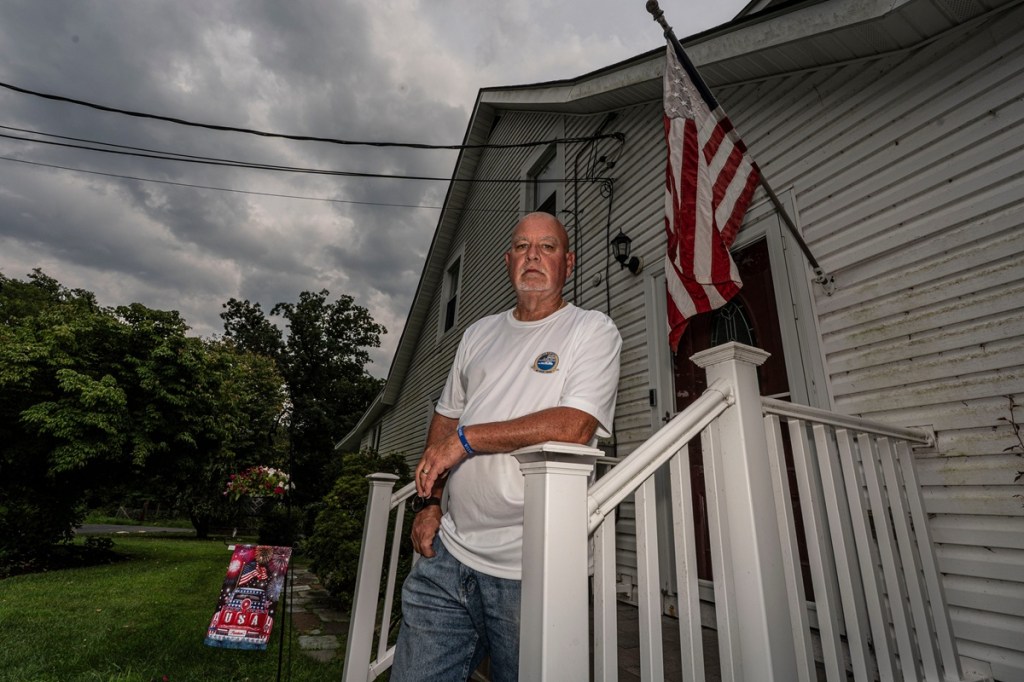
In 2006, at age 43, Palmer needed quadruple bypass surgery. A young guy in good shape, with no family history of heart disease, was shocked by his diagnosis. He’s needed stents — small mesh tubes used to prop open arteries —placed two times since.
The Mohegan Lake resident takes 16 prescription medications, none of which are covered by WTC Health Program because his heart condition isn’t included as a 9/11-related condition. He’s enrolled in the WTC Health Program for asthma and other respiratory conditions.
Palmer said he knows the WTC Health Program examined the link between heart disease and 9/11 exposures, because he took part in a study.
“I’ll never talk bad about the health program,” said Palmer, who joined 9/11 responders to lobby for the Zadroga Act and WTC Health Program funding in Congress year after year. “But I don’t really understand the reason why cardiac isn’t added. Money was put away to research all these illnesses. Why is it not going anywhere?”
FBI agent: ‘I don’t think a fair shake was given’
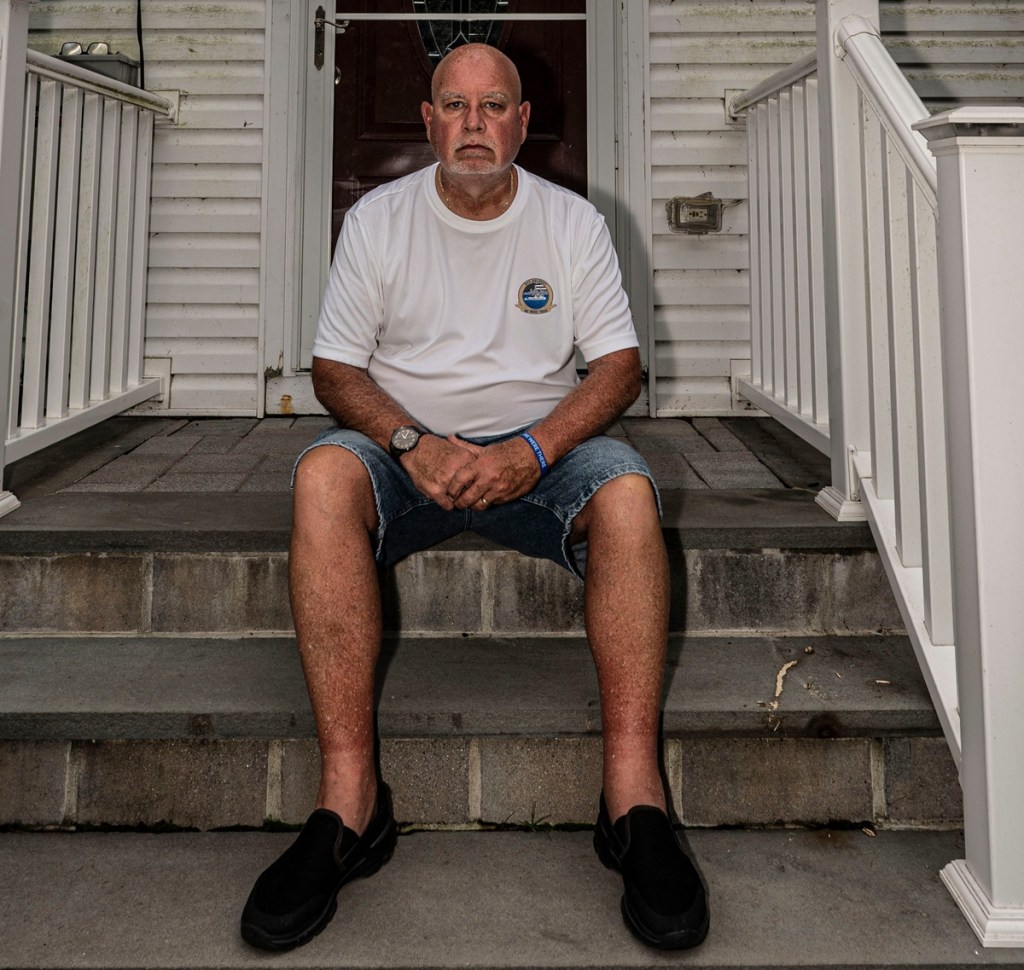
“I’m disappointed,” said retired FBI special agent Thomas O’Connor, who sped toward the Pentagon on Sept. 11, 2001 shortly after 9:37 a.m., knowing smoke was coming from the Pentagon but not yet knowing why. He stayed for weeks and then handled debris for months during the forensic investigation.
A few years ago, O’Connor had a heart attack. Doctors found one artery had a 99% blockage and another was 78% blocked.
O’Connor didn’t have a family history or risk factors for heart disease. “I have had good health my entire life. My weight is good, I never smoked, I was not a heavy drinker, blood pressure and cholesterol were within normal ranges.”
Heart disease has long been linked to the particulate pollution. Those toxins, in an onslaught, were the kinds that were exposed by American Airlines Flight 77 plowing through the western facade of the Pentagon.
“Is that what happened to me? I don’t know,” O’Connor said. “But I want people in the same boat to get a fair shake and [get] taken care of if that’s what the science shows. And I don’t think a fair shake was given in this case.”
“Medicine is like what I did for a living for forensics,” said O’Connor, who retired from the FBI, along with his spouse and fellow special agent, Jean O’Connor, on Sept. 11, 2019. “You’re not trying to fulfill a narrative, you’re looking at the evidence to see where it leads you.”
O’Connor, who turns 63 this October, the now average age for a 9/11 responder, hopes the push for a deeper dive into ischemic heart disease and its relation to 9/11 exposures comes to fruition.
“It’s only fair to the people who went to the towers, the Pentagon and Shanksville when many others wouldn’t have, that they be treated and compensated for the work that they did 25 years ago on Sept. 11,” he said.
Doctor: ‘A valuable question to keep asking’
Dr. Michael Crane, medical director of the World Trade Center Health Program Clinical Center of Excellence at Mount Sinai. said the review process is rigorous and rightly so.
He also understands the frustration.
“Heart disease is in our population,” Crane said of the 9/11 cohort he treats. “The question of whether World Trade (Center terrorist attacks) exacerbated and made rates higher is still a open question and a valuable question to keep asking.”
The World Trade Center Health Program was set up through the James Zadroga 9/11 Health and Compensation Act of 2010. It provides treatment for 9/11-related illnesses, and for first responders, monitoring through regular checkups.
Ben Chevat, executive director of 9/11 Health Watch, said he understood the frustration over the WTCH Health Watch administrator’s rejection.
“While it is clearly disappointing to many responders and survivors that the initial decision by the administration was to deny adding cardiac conditions, we need to remember that 15 years ago the initial decision was to deny adding cancer as a condition, which was subsequently added,” Chevat said.
The next step, Chevat said, had already been taken. “The clinic directors, who had filed the original petition have quickly responded in a letter to the program and will be engaging the administration in dialogue under the petition process that could still result in cardiac conditions being added as covered condition by the program. “
What are ischemic heart diseases?
Ischemic heart diseases cause heart damage from a narrowing of arteries in the heart. These disorders are also generally referred to as coronary artery disease and coronary heart disease.
When arteries narrow, less blood and oxygen reach the heart muscle. The most common result is heart attack.
Ischemic heart disease symptoms cause fatigue, shortness of breath, pain, irregular heartbeat.
Environmental factors linked to ischemic heart disease include fine particulate matter and lead exposure, the same kind of pollutants that prevalent at ground zero and the Pentagon.
The process of adding a new health condition for 9/11 health coverage can be slow. Meanwhile, Crane at Mount Sinai said he’s seeing heart conditions in the 9/11 responder population he treats, and people are suffering.
“That wait is unfair for the people who are not getting the kind of treatment we would give or are not eligible for the compensation process,” Crane said.
Nancy Cutler covers People & Policy. Reach her at ncutler@lohud.com; follow her on X, Bluesky and Instagram at @nancyrockland.
This article originally appeared on Rockland/Westchester Journal News.
Related: NY to fund over $7M of legal bills for immigrant kids after feds balk