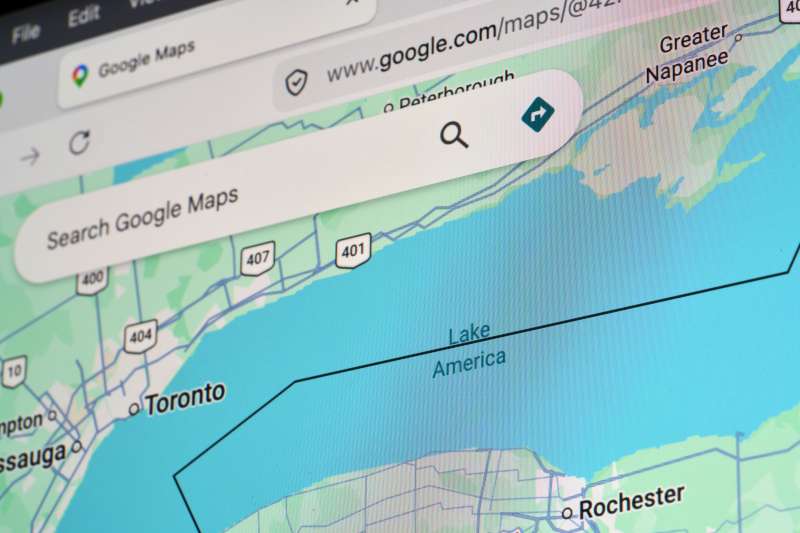
The Seneca Nation of Indians, a sovereign tribe based in Western New York, called Friday, Aug. 28, for President Donald Trump to reverse his executive order renaming Lake Ontario “Lake America,” according to reporting from NYup.com.
Trump signed the order Aug. 27 directing the Interior Department to update the lake’s name in the US geographic naming service within 30 days, part of an escalating trade war with Canada that has seen the US impose 50% tariffs on nearly $20 billion worth of Canadian goods, with Canada set to implement “dollar for dollar” counter-tariffs next week.
“The President cannot assert ownership over our culture or erase it through irresponsible political action,” Seneca Nation President J. Conrad Seneca said in a statement.
Seneca said the renaming violates the 1794 Treaty of Canandaigua, signed by President George Washington and the Haudenosaunee Confederacy, which the Seneca nation was a part of. It names Lake Ontario as a reference point for Seneca territory.
“As indigenous people, those commitments always go back to our treaty of 1794, the Canandaigua treaty,” Seneca told News10NBC. He said no consultation with Native nations took place before the order, which he called a violation of protocol in itself.
A White House spokeswoman told News10NBC that “the majority of the Great Lake’s volume sits in United States territory” and that, “thanks to President Trump’s bold action, its name will now reflect its place in America and her heritage.” She did not address the treaty concerns.
Lake Ontario’s name is itself Indigenous in origin, derived from the Huron word “oniatarí:io,” most often translated as “beautiful lake” or “lake of shining waters,” according to ICT. The Canadian province of Ontario, founded in 1867, was later named after the lake—not the other way around. In the traditional Seneca language, the lake is called “sga:nyodai:yoh,” also meaning “beautiful lake.”
The order applies to US federal naming and does not require Canada, or any other country, to use the name “Lake America.”
Canadian Prime Minister Mark Carney rejected the renaming, saying the lake’s name predates both the Canadian Confederation and the US Declaration of Independence by more than 400 years.
“Canadian women and men also know that things must be called by their name, and this lake is called Lake Ontario—today and forever,” he said.
Ontario Premier Doug Ford wrote in a statement: “It’s Lake Ontario to Canadians and the rest of the world. Now and forever.”
Gov. Kathy Hochul (D) said New York—the only US state that borders Lake Ontario—will not be adopting the new name either.
This move marks Trump’s second unilateral renaming of a body of water shared with another nation. He did the same to the Gulf of Mexico in 2025—a change Mexico rejected. That order sparked an ongoing lawsuit brought forth by The Associated Press after the White House barred its reporters over the wire service’s refusal to use “Gulf of America.”
Separately, the Natural Resources Defense Council sued over the administration’s use of a rarely invoked committee, nicknamed the “God Squad” for its ability to “play God” and decide the fate of a species’ survival. The administration used that committee to exempt Gulf oil drilling from Endangered Species Act protections for species like Rice’s whales, of which an estimated 51 remain.
Rep. Joe Morelle (D-Rochester), Rep. Tim Kennedy (D-Buffalo), and Michigan Rep. Debbie Dingell (D-Michigan) introduced the Hands Off Our Great Lakes Act on Aug. 31, which would nullify Trump’s order and bar any federal official from renaming the five Great Lakes. Dingell called the order “idiotic.”