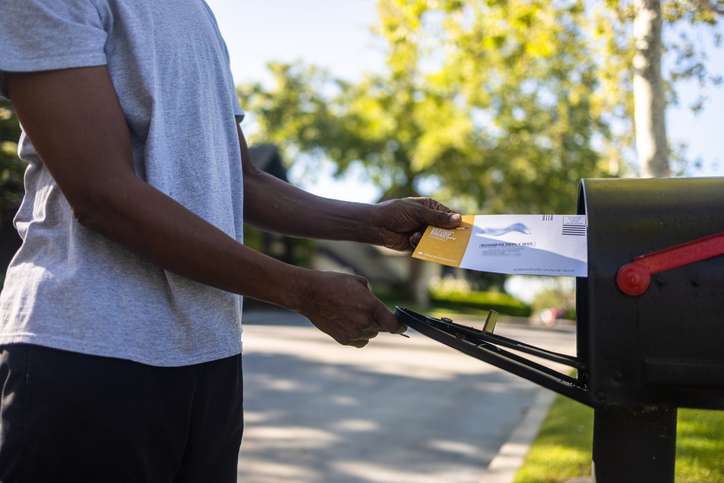
Mail-in voting has never been more accessible in New York. It’s also never been this threatened.
On Mar. 31, President Donald Trump signed an executive order directing the US Postal Service to refuse to send mail ballots to voters not verified through a federal citizenship database that doesn’t yet exist. New York Attorney General Letitia James is among 23 attorneys general suing to block the executive order, calling it “yet another attempt to disenfranchise voters.” current status of the litigation –
This is not Trump’s first attempt—a similar order last year was largely blocked in court.
The outcome here remains uncertain. With New York’s June 23 primary less than two months away, here’s everything you need to know about voting early by mail.
How to request your ballot
In 2023, New York passed the Early Mail Voter Act, opening mail-in voting to any registered voter.
Before requesting your ballot, first confirm whether you’re registered to vote here. From there, you can request an early mail ballot online or in person at your local county board of elections. Once your application is received and processed, your ballot will be mailed to you, and it can be tracked here.
Key deadlines for the June 23 primary
To vote in the June 23 primary, you must be registered by June 13—the deadline for both mail and in-person registration. You can register to vote here. If you want to vote early in person, early voting runs from June 13 to June 21.
If you’re requesting a mail ballot, your application must be received by your local county board of elections by June 13 if submitting by mail or online, or by June 22 if applying in person.
Completed ballots must be postmarked by June 23 and received by your county board no later than June 30 or delivered in-person to your board or any poll site in your county by the close of polls on Election Day.
One important caveat: if you’re not already registered with a party, it’s too late to change your enrollment for the June primary. The deadline for party enrollment changes was Feb. 14. Any changes made after that date won’t take effect until June 30, one week after the primary.
Key deadlines for the November 3 general election
The voter registration deadline for the general election is Oct. 24. Early voting runs Oct. 24 through Nov. 1. Mail ballot applications must be received by Oct. 24 if submitting online or by mail, or by Nov. 2 if applying in person. Ballots must be postmarked by Nov. 3 and received by the board no later than Nov. 10.
“Early and mail-in voting helps those of us who lead busy lives and can’t afford the time off to spend a day at a polling site on Election Day, whether you work multiple jobs to make rent, are a student swamped with class projects, or a parent juggling work and family,” said Louie Sawi, coordinator of Let NY Vote, a nonpartisan coalition of civil rights and grassroots organizations that advocates for expanding ballot access in New York. “[It’s] crucial to making our democracy work.”
Trump himself cast a mail-in ballot in a Florida special election in March, as did First Lady Melania Trump and their son Barron Trump, according to Palm Beach County voting records. That hasn’t stopped him from claiming mailed ballots are ripe for fraud, a claim that has been repeatedly debunked. There is no evidence of widespread voting fraud in any area.
The coalition of states suing to block the order warns that if it stands, it could force last-minute overhauls to election systems, disenfranchise eligible voters, and create chaos ahead of primaries already underway.
In the meantime, New York’s voting system remains operational.